

In an trade outlined by centuries of custom, true innovation stands because the rarest and most respected commodity. Whereas luxurious watchmaking typically celebrates incremental refinements of established methods, the previous decade has witnessed a number of timepieces which have genuinely pushed the boundaries of what mechanical watchmaking can obtain. From revolutionary supplies to groundbreaking mechanics, these revolutionary luxurious watch releases signify the head of horological innovation, difficult conventions whereas respecting the artistry that defines wonderful watchmaking.
1. Zenith Defy Lab (2017)
The Innovation: Zenith’s Defy Lab launched the Zenith Oscillator – a monolithic silicon oscillator that changed the normal sprung steadiness system utilized in mechanical watches for over 300 years. This single element changed the roughly 30 elements of a normal regulator meeting.
Why It Issues: This basic redesign of the watch’s regulating organ achieved unprecedented accuracy (±0.3 seconds per day) whereas eliminating the necessity for lubrication and lowering sensitivity to temperature variations, gravity, and magnetic fields. The oscillator’s 15Hz frequency (108,000 vibrations per hour) far exceeded standard actions, whereas sustaining a 60-hour energy reserve.
The Influence: Whereas manufacturing challenges restricted its business rollout, the Defy Lab demonstrated how pondering past three centuries of horological orthodoxy might yield dramatic efficiency enhancements. It signaled Zenith’s return to its revolutionary roots and impressed subsequent developments in silicon oscillator expertise all through the trade.

2. Grand Seiko Spring Drive Caliber 9R86 (2016)
The Innovation: Whereas Spring Drive expertise debuted earlier, the evolution of the 9R86 chronograph caliber represented its full maturation as a really distinctive timekeeping system. It mixed a conventional mainspring energy supply with an digital regulator that delivered quartz-like accuracy (±1 second per day) with out requiring a battery.
Why It Issues: The Spring Drive represents the one profitable hybrid mechanical-electronic system that preserves the infinite energy circulation of a mechanical motion. Its signature completely smooth-sweeping seconds hand displays the absence of the escapement “ticking” present in all standard mechanical watches, whereas the chronograph measures elapsed time with excellent accuracy unattainable in purely mechanical programs.
The Influence: The Spring Drive demonstrated that technological innovation might come from outdoors the Swiss institution, with Japan’s Grand Seiko creating a completely new class of timekeeping that bridges conventional mechanical and fashionable digital approaches. Its business success proved that real innovation finds appreciative audiences even amongst conventional collectors.

3. Omega Seamaster Aqua Terra >15,000 Gauss (2015)
The Innovation: Omega’s breakthrough wasn’t simply making a watch proof against excessive magnetic fields, however attaining this with out counting on the normal gentle iron interior case. As a substitute, the corporate developed non-magnetic parts for the motion itself, together with silicon steadiness springs and nickel-phosphorus escape wheels.
Why It Issues: Magnetism represents one of many biggest threats to mechanical watch accuracy in fashionable environments crammed with digital units. Earlier antimagnetic watches sacrificed show case backs and restricted motion thickness on account of their protecting interior circumstances. Omega’s method enabled slimmer actions with seen mechanics whereas offering unprecedented safety.
The Influence: This expertise, later branded as Grasp Chronometer certification, has since been rolled out throughout almost all Omega product strains, elevating your complete model’s technical specs. It pushed the trade towards addressing real-world efficiency challenges as a substitute of focusing solely on conventional problems, triggering comparable developments from opponents.

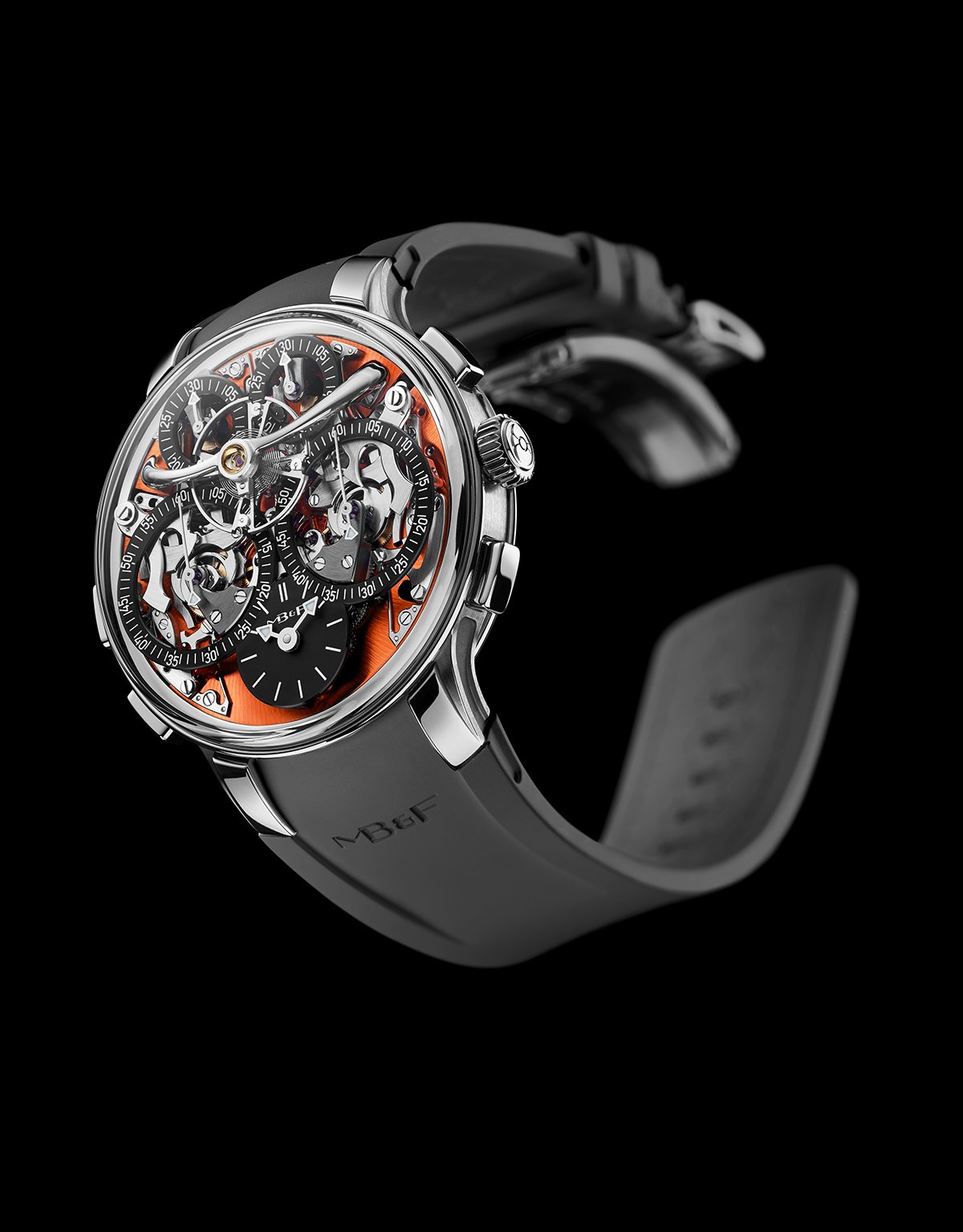
4. MB&F Legacy Machine Sequential EVO (2022)
The Innovation: Grasp watchmaker Stephen McDonnell created the primary chronograph mechanism with two full chronograph programs that may operate totally independently, as a split-seconds chronograph, or in synchronized “lap timer” mode—all managed by means of a single dial-mounted pusher.
Why It Issues: The structure completely rethinks chronograph design moderately than iterating on two centuries of established chronograph mechanisms. Its vertical clutch system, standalone power supply for the chronograph, and novel ceramic ball-detent system signify critical developments in considered one of watchmaking’s core problems.
The Influence: The LM Sequential EVO demonstrated that even essentially the most mature problems may very well be basically reimagined by means of contemporary engineering approaches. It bolstered MB&F’s transition from making watches impressed by childhood influences to creating genuinely revolutionary horological machines with technical significance.

5. Bulgari Octo Finissimo Tourbillon Computerized (2018)
The Innovation: Bulgari claimed the world’s thinnest computerized tourbillon watch with a motion simply 1.95mm thick and a complete case thickness of solely 3.95mm. This required basic rethinking of motion structure, together with a peripheral rotor and parts lowered to minimal attainable dimensions.
Why It Issues: Creating an ultra-thin tourbillon is difficult sufficient; including computerized winding inside such extreme constraints represented a triumph of miniaturization and engineering. The watch demonstrated that excessive thinness is its personal technical complication, requiring options as revolutionary as any conventional horological operate.
The Influence: The Octo Finissimo assortment established Bulgari as a critical watchmaking drive past its jewellery heritage, profitable quite a few trade awards and setting a number of world data. It triggered a renewed trade concentrate on ultra-thin watchmaking as an indication of technical prowess.

6. Greubel Forsey Nano Foudroyante (2017)
The Innovation: Greubel Forsey created a mechanical foudroyante (leaping seconds) complication that operates at a rare scale, with the foudroyante hand making six jumps per second – requiring parts so small they push the boundaries of what’s achievable in mechanical watchmaking. The watch combines this ultra-precise leaping seconds show with their signature inclined tourbillon at 25 levels.
Why It Issues: The foudroyante complication is among the many rarest in haute horlogerie, and executing it at this frequency (6 jumps per second) required growing parts at near-microscopic dimensions whereas sustaining reliability. The steadiness operates at 5Hz (36,000 vibrations per hour), and the foudroyante mechanism should operate flawlessly alongside the complicated tourbillon system – all inside Greubel Forsey’s signature multi-layered architectural motion design.
The Influence: The Nano Foudroyante demonstrated that Greubel Forsey might push mechanical miniaturization to extremes whereas sustaining their uncompromising requirements for hand-finishing and reliability. By combining considered one of watchmaking’s rarest problems with their tourbillon experience at this scale, they proved that innovation doesn’t all the time imply abandoning conventional problems – typically it means executing them at ranges beforehand thought unattainable.
The watch bolstered Greubel Forsey’s place as one of many few manufactures genuinely advancing the technical frontiers of mechanical watchmaking.

7. Rolex Caliber 3255 with Chronergy Escapement (2015)
The Innovation: Rolex developed a completely new escapement structure referred to as Chronergy that achieves roughly 15% better effectivity than conventional Swiss lever escapements. The system makes use of an optimized geometry for the escape wheel and pallet fork, manufactured from nickel-phosphorus alloy for improved magnetic resistance. Mixed with the Paraflex shock absorber and Parachrom hairspring, the motion delivers a 70-hour energy reserve – a big improve from the earlier 48 hours.
Why It Issues: The Swiss lever escapement has remained basically unchanged for over 250 years, making any real enchancment terribly uncommon. Rolex’s Chronergy escapement represents one of many few profitable redesigns of this important element, attaining measurable efficiency positive factors with out sacrificing reliability. The motion additionally launched the Superlative Chronometer certification (±2 seconds per day after casing), exceeding COSC requirements.
The Influence: The Caliber 3255 set a brand new efficiency benchmark for luxurious watch actions, forcing opponents to rethink their very own chronometer requirements. Rolex has since rolled out this expertise throughout a number of collections, demonstrating that innovation in basic watchmaking parts can ship tangible advantages to on a regular basis wearers. The prolonged energy reserve and improved accuracy make the watches extra sensible every day companions, proving that technical development doesn’t have to be unique to be priceless.

8. TAG Heuer Carrera Heuer 02T (2016)
The Innovation: TAG Heuer created a Swiss-made tourbillon chronograph watch priced below $15,000 roughly one-tenth the worth of its closest competitor. This required full redesign of the tourbillon manufacturing course of, together with revolutionary use of automation and new supplies.
Why It Issues: The tourbillon had lengthy represented the head of watchmaking exclusivity, with costs sometimes exceeding $100,000. TAG Heuer’s achievement democratized entry to haute horlogerie’s most prestigious complication whereas sustaining Swiss manufacturing and COSC chronometer certification.
The Influence: The Heuer 02T pressured the trade to rethink pricing constructions for prime problems, demonstrating that even essentially the most prestigious mechanical options may very well be produced at extra accessible worth factors by means of revolutionary manufacturing. It expanded the potential marketplace for wonderful mechanical watches and challenged synthetic shortage fashions.

9. Vacheron Constantin Reference 57260 (2015)
The Innovation: Created for a personal collector, this pocket watch integrated 57 problems – essentially the most in any timepiece ever made. Improvements included a number of new problems by no means beforehand achieved, similar to a double retrograde split-seconds chronograph and Hebraic perpetual calendar.
Why It Issues: Past breaking the document for complication rely, the 57260 demonstrated that mechanical watchmaking nonetheless had unexplored frontiers. Growth required eight years and three watchmakers, leading to 2,826 parts working in concord inside a single mechanical system.
The Influence: The 57260 reaffirmed the potential for innovation inside classical watchmaking traditions, inspiring different producers to push mechanical complexity to new ranges. It additionally highlighted the continued relevance of the bespoke fee mannequin that drove a lot historic horological innovation.

10. Richard Mille RM 27-01 Rafael Nadal (2015)
The Innovation: Richard Mille created a motion suspended inside the case by a community of braided metal cables simply 0.35mm thick, connected to tensioners positioned on the case edges. This technique remoted the motion from shock whereas weighing simply 3.5 grams.
Why It Issues: This revolutionary suspension system enabled a tourbillon watch to face up to accelerations of as much as 5,000 G’s – making it genuinely wearable throughout skilled tennis matches. The whole watch weighed lower than 19 grams (together with strap), establishing new potentialities for ultra-lightweight, shock-resistant timepieces.
The Influence: The RM 27-01 redefined how luxurious watchmakers method sports activities efficiency, proving that even essentially the most delicate problems might operate in excessive situations with revolutionary engineering. It helped set up Richard Mille’s fame for real technical innovation beneath its distinctive aesthetic.

Closing Ideas on the Most Revolutionary Luxurious Watch Releases
True innovation in luxurious watchmaking requires balancing respect for hundreds of years of custom with the braveness to problem basic assumptions. These ten timepieces signify completely different approaches to that problem -some leveraging cutting-edge supplies and manufacturing methods, others reimagining primary ideas of mechanical design, and some questioning the very nature of how we work together with timekeeping units.
What unites them is a refusal to simply accept standard limitations, as a substitute asking what is likely to be attainable when watchmaking’s brightest minds are given freedom to discover. In an trade typically overly targeted on heritage and incremental enhancements, these watches remind us that the mechanical timepiece stays a canvas for real innovation – proving that even after centuries of improvement, the probabilities for reinvention stay limitless.
Learn subsequent:
