

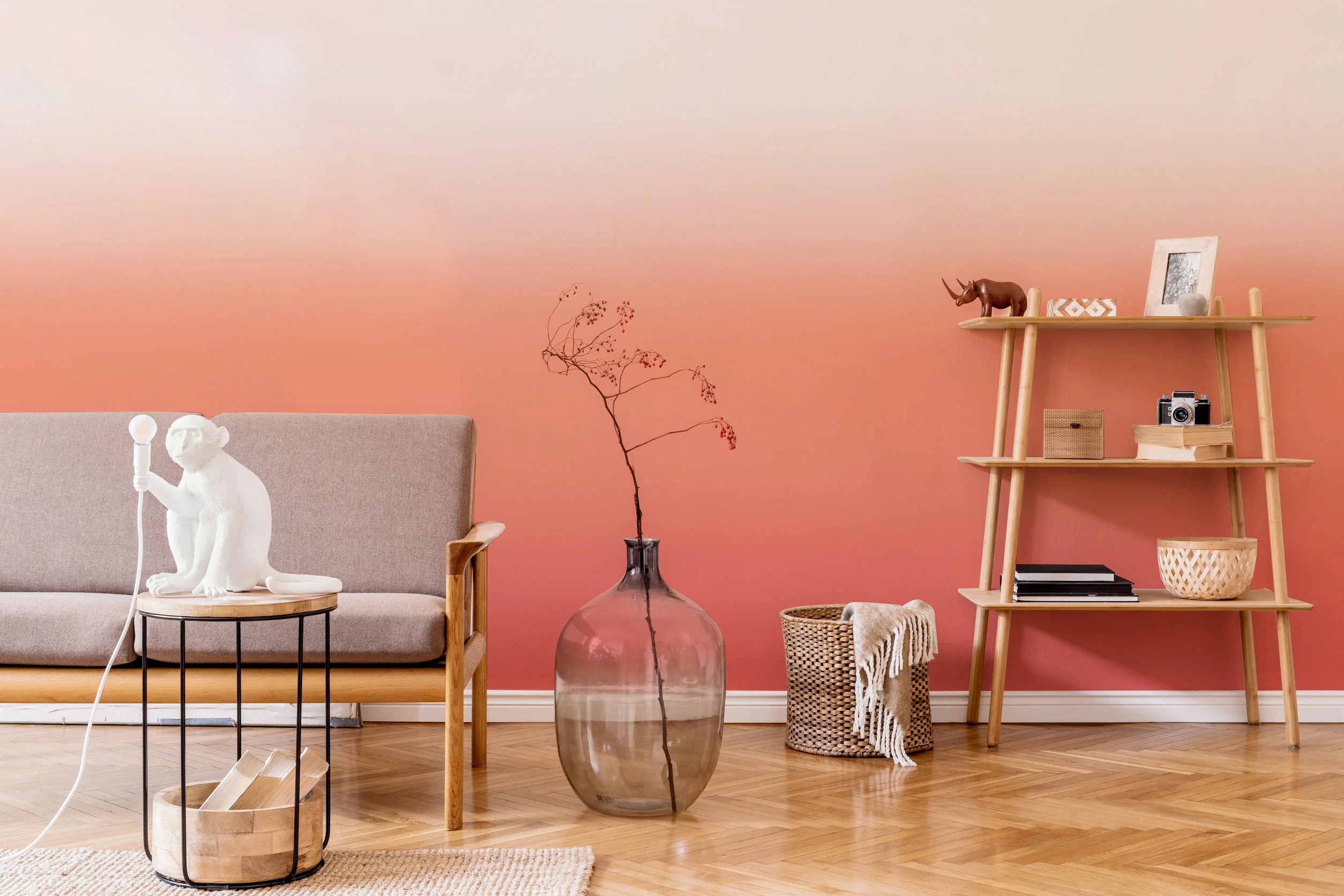
Ombre in interiors is a recent method constructed on gradual color transitions—both from deep to mild tones or from one hue to a neighbouring shade. Usually known as a “gradient” or “dégradé,” this impact might be woven into many parts of a room’s design. Used thoughtfully, it provides depth, softness, and motion with out resorting to busy patterns. Beneath, we’ve gathered sensible concepts for the place—and the way—to use ombre in an condo or workplace so the look feels intentional, not experimental.
Why it really works: a managed fade guides the attention, subtly reshaping how we understand proportion and scale. Horizontal gradients can visually widen a wall; vertical gradients could make ceilings really feel larger. As a result of ombre depends on worth shifts reasonably than loud distinction, it performs effectively with minimal, traditional, and even daring schemes and is straightforward to replace over time.
Ombre within the ornament of the partitions
The wall is the place ombre speaks loudest. You should use the impact in any room; the bottom line is deciding on tones that swimsuit the operate and pure mild. Executing a big, seamless gradient takes care and expertise—an excellent hand with a sprayer or brief, managed strokes with a curler/brush to keep away from streaks. On smaller wall sections (niches, headboard zones, fire returns), a DIY method is totally doable and the payoff might be beautiful.
One guiding rule for traditional and low ceilings: preserve darker shades towards the ground and transition lighter as you progress upward—this visually heightens the house. In case your ceiling tops 3.5 metres, you have got extra freedom: attempt top-to-bottom, bottom-to-top, and even side-to-side fades to sculpt the room’s proportions. For essentially the most restful impact, select analogous hues (e.g., mist → sky → deep blue) or a single color shifting by three values.
Sensible ideas: check blends on a primed pattern beneath daylight and heat night mild; keep on with matte/eggshell so the fade reads softly; preserve a moist edge between bands and “feather” joins with a clear, dry curler. In high-traffic zones, seal with a low-sheen clear coat to make cleansing simpler with out including glare. In case you choose an art-led method, a big gradient canvas can create the identical visible elevate with zero mess and immediate flexibility.
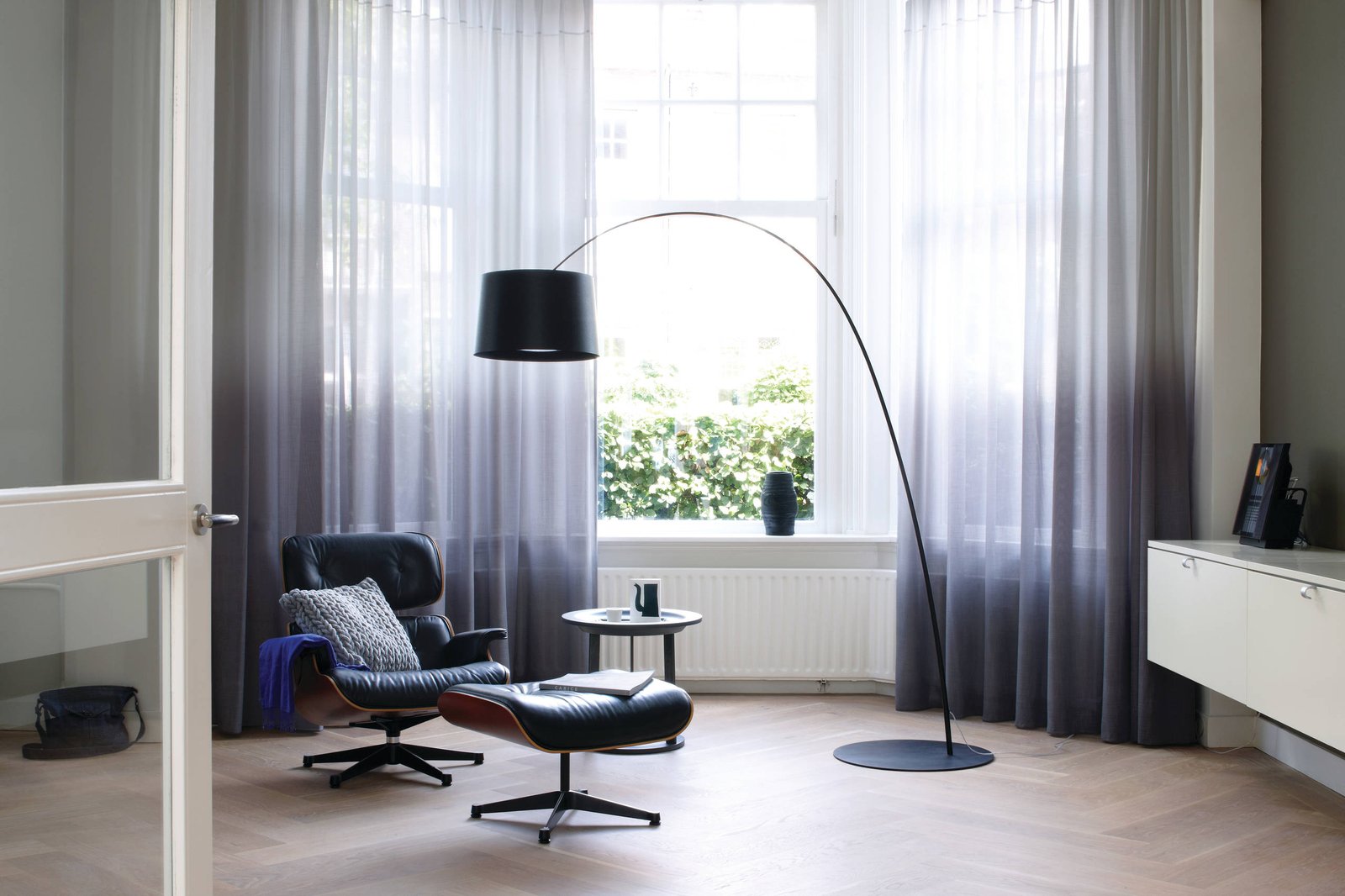
Ombre within the ornament of home windows
Textile makers have embraced gradients, so discovering ombre materials in the precise palette is easy. Gentle, ethereal supplies—linen, cotton voile, silk blends, organza—let the fade learn softly and preserve home windows brilliant. A darker hem that lightens towards the header grounds the view; a pale hem deepening upward frames the glass with a delicate vignette. Tender, watercolour-style prints mimic hand-dyed washes and add an artisanal notice with out visible noise.
Take into account how the gradient interacts with exterior mild: south-facing rooms tolerate stronger shifts, whereas dimmer rooms profit from refined tonal steps. Lining issues too—select a light-weight or dim-out lining that preserves drape and prevents the gradient from trying uninteresting in backlight. Coordinate curtain fades with wall or rug tones so the palette feels cohesive reasonably than themed.

Mattress linen with an ombre impact
As a result of bedding covers a big visible area, an ombre cover or quilt can set the complete temper of a bed room. The problem is high quality: search for well-dyed textiles with easy tonal steps so the gradient stays crisp after washing. Monochrome fades (charcoal → silver) really feel lodge calm; coastal palettes (sand → shell → sea) learn relaxed and ethereal. Maintain sheets stable and echo one gradient tone in cushions or a throw to keep away from litter.
Care and luxury depend: choose breathable fibres (cotton percale, sateen, linen) with colourfast dyes; wash on mild cycles and dry out of direct solar to protect the transition. In case you like seasonal modifications, rotate a deeper winter gradient with a lighter summer time one whereas protecting the identical impartial sheets—quick refresh, minimal spend.

Ombre furnishings
Furnishings is one other clear canvas for the impact—particularly framed items with doorways or drawers (dressers, sideboards, cupboards). You don’t have to hunt for ready-made colourways: sand, prime, and paint your individual gradient. Begin with one base hue plus white; combine a number of tints to step from deep on the backside to pale on the high (or vice versa). Constant spacing between shades and unified {hardware} preserve the end result trying customized, not artful. For a softer contact, upholster a bench or headboard in ombre cloth that fades vertically so as to add top.
In case you’d reasonably introduce the look by artwork as an alternative of paint, a single giant ombre paintings delivers the identical serene transition with zero mess. For scale-specific, ready-to-hang items that match your wall width and palette, discover curated choices at https://tryartwork.com—a assured, outsized gradient can anchor a seating space or headboard wall in minutes, guiding the location of lamps, facet tables, and accent chairs whereas protecting the room calm and cohesive.
Lastly, bear in mind proportion: restrict a room to at least one “hero” gradient (wall, window, bedding, or furnishings) and let the remainder of the palette assist it. That restraint retains the ombre impact refined, making certain the house feels intentional, balanced, and quietly dynamic.
