

In the case of engagement rings and fine jewelry, patrons at present are asking smarter questions: Is it moral? Is it sustainable? Is it well worth the value? That’s why moissanite and lab-grown diamonds (additionally known as man-made diamonds) are on the heart of a rising debate. Each look beautiful, each are eco-friendly, and each come with out the luggage of mined diamonds.
However right here’s the catch—whereas one is a diamond, the opposite is a totally different gemstone solely. And to the untrained eye, the distinction isn’t obvious. So, how do they evaluate, and why achieve this many individuals confuse one for the opposite? Let’s perceive the intricacies.
Why Evaluate Moissanite and Lab-Grown Diamonds?
Each gems are lab-created, moral, and budget-friendly in comparison with mined diamonds; nevertheless, their variations are notable. Moissanite’s fiery sparkle and affordability enchantment to some, whereas lab-grown diamonds supply the genuine diamond expertise at a decrease price. Right here’s why they’re usually confused:
- Visible Similarity: To the untrained eye, each seem like diamonds.
- Moral Attraction: Each are conflict-free and sustainable.
- Jewellery Use: They’re featured in quite a lot of comparable settings, from engagement rings to pendants.
Except you’re evaluating them beneath a jeweler’s loupe, you would possibly by no means know the distinction.
As customers turn out to be extra acutely aware of ethics, affordability, and sparkle, these two options to mined diamonds are stealing the highlight. However which one is best for you? Whether or not you’re looking for an engagement ring, earrings, or a press release necklace, understanding the important thing variations will help you get monetary savings and align along with your private values.
This information explores their distinctive properties that can assist you decide which gem fits your type, price range, and values.
What Is Moissanite?
Moissanite is a gemstone that’s usually mistaken for a diamond because of its dazzling look, however it’s a singular mineral in its personal proper. Found in 1893 by French chemist Henri Moissan in a meteor crater, pure moissanite is extraordinarily uncommon. Right this moment, almost all moissanite utilized in jewellery is lab-created from silicon carbide (SiC), a compound of silicon and carbon.
Not like diamonds, moissanite isn’t carbon-based—it’s a distinct crystal construction altogether. This lab-grown course of makes it accessible and constant in high quality. Popularized within the Nineties by manufacturers like Charles & Colvard, moissanite has turn out to be a go-to for these in search of excessive sparkle with out the excessive price ticket. It’s conflict-free, eco-friendly, and accessible in numerous cuts, from spherical good to cushion.
What makes moissanite particular?
- Distinctive Sparkle: Its excessive refractive index (2.65–2.69) creates vibrant, rainbow-like fireplace. Not like diamonds, which replicate largely white mild, moissanite produces fiery rainbow flashes. Some individuals love the colourful brilliance; others discover it too “disco-ball” in comparison with the traditional diamond look.
- Sturdiness: With a 9.25 hardness on the Mohs scale, moissanite is appropriate for day by day put on however barely much less scratch-resistant than diamonds.
- Eco-Pleasant: Lab-created, avoiding mining’s environmental and moral points.
Finest for: Those that love fiery sparkle and affordability over diamond authenticity, making it a preferred alternative for engagement rings, particularly for budget-conscious patrons.
What Are Lab-Grown Diamonds?
Lab-grown diamonds, also called man-made diamonds, synthetic or cultured diamonds, are real diamonds created in managed laboratory environments. They share the precise chemical composition—pure carbon organized in a crystal lattice—as pure diamonds fashioned deep within the Earth’s mantle over billions of years.
Launched commercially within the Nineteen Fifties for industrial use, lab-grown diamonds entered the jewellery market within the 2010s. Establishments just like the Gemological Institute of America (GIA) grade them utilizing the identical 4Cs (reduce, colour, readability, carat) as mined diamonds. They’re similar in each approach besides origin, making them a sustainable alternative for diamond lovers.
There are two essential manufacturing strategies:
- Excessive-Stress Excessive-Temperature (HPHT): Mimics the Earth’s pure circumstances by subjecting carbon to excessive strain and warmth.
- Chemical Vapor Deposition (CVD): Makes use of a gasoline combination to deposit carbon atoms onto a diamond seed, layer by layer.
Chemically and bodily, they’re similar to mined diamonds. They’ve the identical carbon construction, the identical sparkle, and the identical hardness.
What makes man-made diamonds particular?
- Authenticity: Identical to mined diamonds in composition, brilliance, and sturdiness (an ideal 10 on the Mohs scale).
- Affordability: 40–70% cheaper than mined diamonds.
- Sustainability: Battle-free with a decrease environmental footprint.
Finest for: Consumers in search of real diamonds with moral sourcing and lasting worth.
Moissanite and Man-Made Diamonds Comparability
Whereas each are lab-created and supply moral options to mined stones, moissanite and lab-grown diamonds differ in a number of important methods. Right here’s an in depth breakdown:
1. Composition and Origin
- Moissanite: Manufactured from silicon carbide (SiC), an artificial gem created in labs. It’s not a diamond however a diamond simulant with its personal distinctive properties.
- Lab-Grown Diamonds: Pure carbon, chemically and bodily similar to pure diamonds, grown by way of HPHT or CVD strategies.
- Key Perception: If authenticity as a “actual diamond” issues, lab-grown wins. Moissanite appeals to those that prioritize uniqueness over diamond standing.
2. Hardness and Sturdiness
- Moissanite: Scores 9.25 on the Mohs hardness scale, making it extremely sturdy however barely extra liable to scratches than diamonds.
- Lab-Grown Diamonds: An ideal 10 on the Mohs scale—the toughest identified materials.
- Key Perception: Each are appropriate for on a regular basis put on, like engagement rings. Nonetheless, lab-grown diamonds outperform pure diamonds in long-term resilience, making them very best for heirlooms.
3. Brilliance, Fireplace, and Sparkle
- Moissanite: With a better refractive index (2.65–2.69), moissanite produces a daring, rainbow-like sparkle. This fiery impact might be dramatic, particularly in bigger stones, although some patrons discover it much less “diamond-like.”
- Lab-Grown Diamonds: With a refractive index of two.42, lab-grown diamonds ship the identical traditional brilliance as pure diamonds—white flashes of sunshine with balanced fireplace and scintillation. That is the look most individuals count on once they consider a diamond.
- Key Perception: Moissanite’s sparkle is eye-catching however distinctly totally different from that of a diamond. Lab-grown diamonds, alternatively, present the timeless, elegant sparkle acknowledged worldwide because the mark of luxurious—making them the popular alternative for engagement rings.
4. Moral and Environmental Impression
- Moissanite: Lab-created with a low environmental footprint. No mining means minimal ecological harm and no threat of battle affiliation.
- Lab-Grown Diamonds: Equally moral and conflict-free, with manufacturing strategies enhancing in vitality effectivity yearly. Not like moissanite, lab-grown diamonds additionally fulfill the need for a “actual” diamond with a transparent provenance.
- Key Perception: Each choices are sustainable, however lab-grown diamonds are the solely alternative that blends eco-conscious values with the cultural and emotional weight of proudly owning a real diamond. This makes them the smarter luxurious possibility for at present’s acutely aware patrons.
5. Certification, Resale Worth, and Longevity
- Moissanite: Comes with producer certificates however no common grading just like the 4Cs. Resale worth is low, because it’s seen as a simulant.
- Lab-Grown Diamonds: Graded by GIA or IGI, making certain transparency. They maintain higher resale worth (although lower than pure diamonds) and don’t cloud over time.
- Key Perception: Lab-grown diamonds supply higher funding potential, whereas moissanite is good for instant enjoyment with out issues about resale.
Moissanite vs. Lab-Grown Diamonds Worth
Worth is a significant factor when selecting between moissanite vs. lab-grown diamonds. Right here’s how they stack up in 2025:
- Moissanite: Essentially the most budget-friendly alternative, with a 1-carat stone usually starting from $300 to $600; a 2-carat stone ranges from $600 to $800 (2025 costs), relying on reduce and retailer. Its low price displays its standing as a diamond various quite than a real diamond.
- Lab-Grown Diamonds: Dearer than moissanite however nonetheless way more reasonably priced than mined diamonds. A 1-carat lab-grown diamond with good specs (VS readability, G colour) usually ranges between $800 and $2,000, and a 2-carat stone ranges from $1,600 to $4,000, relying on the model and certification. Because of technological developments, costs have dropped dramatically—making lab-grown diamonds extra accessible than ever.
| Carat Weight | Lab-Grown Diamond (USD) | Moissanite (USD) |
| 1-carat | $800 – $2,000 | $300 – $600 |
| 2-carat | $1,600 – $4,000 | $1,600 – $4,000 |
Moissanite vs. Lab-Grown Diamonds Facet by Facet
To make your choice simpler, right here’s a side-by-side comparability of moissanite vs. man-made diamonds:
| Facet | Moissanite | Lab-Grown Diamonds |
| Composition | Silicon Carbide (SiC) | Pure carbon (actual diamond) |
| Hardness (Mohs) | 9.25 | 10 |
| Refractive Index | 2.65–2.69 (fiery, rainbow sparkle) | 2.42 (traditional white sparkle) |
| Worth (1-Carat, 2025) | $300–$600 | $800–$2,000 |
| Worth (2-Carat, 2025) | $600–$800 | $1,600–$4,000 |
| Moral Score | Excessive (lab-created) | Excessive (lab-created) |
| Certification | Producer certificates | GIA/IGI 4Cs grading |
| Resale Worth | Minimal | Reasonable |
Key Perception: Moissanite affords vibrant sparkle and unbeatable costs, whereas lab-grown diamonds present genuine diamond properties and higher resale potential.
Execs and Cons: Moissanite vs. Lab-Grown Diamonds
Moissanite Execs:
- Unmatched fireplace and brilliance for a flashy look.
- Extraordinarily reasonably priced, permitting larger stones.
- Moral and eco-friendly manufacturing.
- Much less prone to present inclusions.
Moissanite Cons:
- Not a “actual” diamond—could not go as one to consultants.
- Barely decrease hardness; can cloud if not cared for.
- Restricted resale worth.
—-—————————————————————————————————————–
Lab-Grown Diamonds Execs:
- An identical to pure diamonds in each property.
- Excessive sturdiness and timeless enchantment.
- Licensed and probably resalable.
- Rising market acceptance.
Lab-Grown Diamonds Cons:
- Dearer than moissanite.
- Sparkle is subtler in comparison with moissanite’s rainbow impact.
- Nonetheless pricier for very massive carats.
Market Tendencies in 2025: Why Each Are Booming
The gemstone market is evolving quickly. Lab-grown diamonds reached $27.95 billion in 2025, up from $25.68 billion in 2024, with a projected CAGR of 8.3% to $38.86 billion by 2029. This progress is pushed by millennial and Gen Z patrons prioritizing sustainability—gross sales have surged 7–10% yearly, now accounting for 15% of the worldwide diamond jewellery market.
Moissanite can be on the rise, with the market valued at $1.5 billion in 2024 and projected to achieve $3.2 billion by 2033, rising at a 9.4% CAGR. Tendencies present customers choosing lab-grown diamonds over mined diamonds because of value drops (as much as 85% for lab-grown) and moral concerns. On platforms like X, customers debate: “Simply purchase the moissanite—it’s conflict-free and sparkles extra!” whereas others notice the status of lab-grown diamonds.
Delusion vs. Truth: Clearing the Confusion
Delusion 1: Moissanite is a kind of diamond.
Truth: Moissanite is a gemstone in its personal proper, composed of silicon carbide. Solely lab-grown diamonds (and mined ones) are true diamonds.
Delusion 2: Lab-grown diamonds are “pretend” diamonds.
Truth: Lab-grown diamonds are 100% actual—similar carbon construction, similar brilliance, similar sturdiness—as mined diamonds. The one distinction is origin: created with superior expertise as an alternative of extracted from the earth.
Delusion 3: Moissanite and lab-grown diamonds are mainly the identical.
Truth: They’re not. Moissanite is a diamond various fabricated from silicon carbide, whereas lab-grown diamonds are chemically and bodily similar to pure diamonds. If you would like a real diamond, lab-grown is the genuine alternative.
Delusion 4: You possibly can’t inform the distinction between moissanite and a diamond.
Truth: To the skilled eye, sure, you may. Moissanite has a rainbow sparkle (“disco ball” impact), whereas diamonds—lab-grown or mined—have the timeless brilliance individuals acknowledge immediately.
Delusion 5: Lab-grown diamonds and moissanite don’t maintain worth.
Truth: Like all diamonds, lab-grown stones include certification and grading. Whereas resale differs from mined stones, they keep way more recognition and desirability than moissanite, which has little to no secondary market.
Delusion 6: Moissanite is much less sturdy than diamonds in order that it received’t final.
Truth: With a 9.25 Mohs ranking, moissanite is extremely sturdy—robust sufficient for on a regular basis put on. Diamonds (pure or lab-grown) are tougher, however each are long-lasting.
Delusion 7: Lab-grown diamonds are “pretend.”
Truth: They’re chemically and bodily similar to mined diamonds—simply grown in a lab as an alternative of the earth.
Which One Ought to You Select?
It actually is dependent upon what you worth most:
- Select Moissanite if… You need a beautiful, sturdy, and budget-friendly gemstone with out worrying about resale worth.
- Select Lab-Grown Diamond if… You need a actual diamond—similar construction, similar brilliance, with an eco-conscious origin, at a lower cost than mined diamonds.
Contemplate your way of life: Energetic wearers would possibly favor diamonds’ hardness, whereas sparkle lovers lean towards moissanite. All the time purchase from respected sellers and get a certificates.
Key takeaway: Moissanite is budget-friendly, however for those who’re in search of a timeless diamond with luxurious standing and resale recognition, lab-grown diamonds are well worth the greater value.
FAQs: Moissanite vs. Lab-Grown Diamonds
Q1. Is moissanite nearly as good as a lab-grown diamond?
Moissanite excels in affordability and fireplace, however isn’t a diamond. Lab-grown diamonds are actual diamonds with superior hardness.
Q2. Are you able to inform the distinction visually?
In small sizes, they’re comparable, however moissanite’s rainbow fireplace stands out in bigger stones.
Q3. Why do individuals select lab-grown diamonds over moissanite?
Lab-grown diamonds are actual diamonds. They provide the identical brilliance, hardness, and luxurious standing as pure diamonds—with out the excessive price or moral issues. Moissanite is gorgeous, however it’s not a diamond, which is why many patrons favor lab-grown diamonds when making a significant buy, akin to an engagement ring.
This autumn. Are lab-grown diamonds extra sturdy than moissanite?
Sure. Diamonds (lab or mined) rating an ideal 10 on the Mohs scale—the toughest pure materials on earth. Moissanite may be very sturdy, rated 9.25, however it’s nonetheless barely much less proof against scratches over the course of its lifetime.
Q5. Which stone sparkles extra?
Moissanite sparkles with rainbow flashes, giving it a daring, fiery look. Lab-grown diamonds have the traditional, elegant brilliance individuals affiliate with luxurious and custom. In the end, it comes down to non-public desire, however most individuals go for lab-grown diamonds because of their timeless sparkle.
Q6. Is moissanite cheaper than lab-created diamonds?
Sure, moissanite is considerably cheaper. A 1-carat moissanite prices $300–$600, whereas a 1-carat lab-grown diamond ranges from $800–$2,000 in 2025.
Q7. Do lab-grown diamonds and moissanite include certification?
Lab-grown diamonds are graded by main gemological institutes (like IGI or GIA) similar to pure diamonds and include certification. Moissanite doesn’t bear the identical grading course of; due to this fact, it might include producer certificates however lacks a common grading system.
Q8. Which one is healthier for long-term worth?
Lab-grown diamonds maintain far larger recognition and resale potential in comparison with moissanite, which has just about no resale market. When you’re in search of each emotional and monetary worth, lab-grown diamonds are the best way to go.
Q9. What’s cheaper for a 2-carat ring?
Moissanite: $600–$800; Lab-grown: $1,600–$4,000
Q10. The place can you purchase the very best lab-grown diamonds?
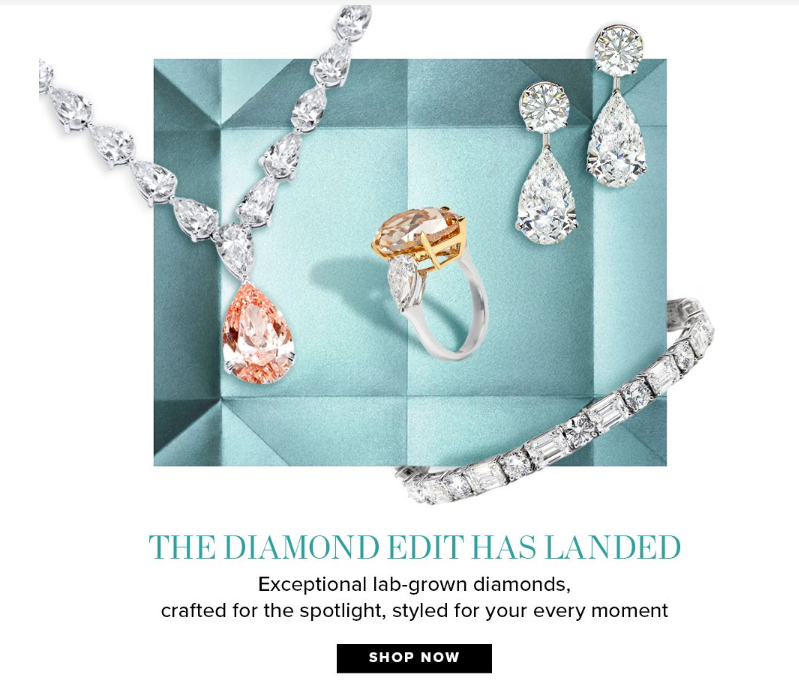
The Luxurious Closet affords a surprising vary of GIA-certified lab-grown diamonds, accessible in rings, pendants, bracelets, and earrings. Discover the gathering to search out superbly crafted, reasonably priced diamond jewellery.
The Clear Selection Is Yours: Discover Your Good Sparkle @ The Luxurious Closet
Moissanite and lab-grown diamonds could look comparable, however they’re not interchangeable. One is a gemstone with its personal fiery sparkle, the opposite is a actual diamond born in a lab.
The excellent news? Neither alternative is flawed. Each are moral, sustainable, and undeniably lovely—it simply is dependent upon whether or not you’re after affordability or authenticity.
So, subsequent time you’re looking for sparkle, you’ll know precisely what’s on the desk—and you should buy what feels proper on your story. On the Luxury Closet, we convey you a unbelievable line of lab-grown diamond jewelry known as The Diamond Edit. Discover our vary and decide the one which catches your fancy with out bothering concerning the value, because it’s very reasonably priced.
