

Within the first e book of the kids’s sequence “The Wild Robotic,” a robotic named Roz adapts to residing on an island with animals. Regardless of her technical skills, Roz requires steerage from the animals.
Like the way in which Roz should adapt, the beverage {industry} has tailored to SKU proliferation by the usage of robotics.
Drew Eubank, government vice chairman at Zion Options Group, Covington, Ky., shares how SKU proliferation inside the beverage {industry} has influenced automation in warehouses.
“As with most rising operations, extra SKUs equals more room and extra complexity,” he says. “With FDA laws, this oftentimes means more room and headcount. Automation helps to complement each, offering extra environment friendly retrieval of stock and a extra predictable headcount base, whereas optimizing footprint (much less long-term fastened prices) as stock and SKU depend grows.”
Jane Heffner, vice chairman of gross sales for Common Robots and Cellular Industrial Robots (MiR), Novi, Mich., says that SKU proliferation has accelerated the adoption of automation, particularly collaborative robotics.
“Increased combine automation with conventional options (like conventional multi-layer palletizing) [is] too inflexible and fewer value environment friendly; subsequently, reliance on handbook labor in end-of-line packaging is a problem,” she explains. “Collaborative palletizers tackle that very nicely, as they supply brief ROI, even on this high-mix surroundings.”
Common Robots’ cobots are being deployed for end-of-line palletizing, case packaging and labeling and sorting stations, Heffner says. The versatile programming of the cobots means operators can shortly reconfigure a robotic for shifting SKU portfolios, she provides.
“Cobots additionally assist warehouses optimize house and labor — by automating repetitive duties throughout various SKUs, they cut back handbook errors, pace up order success and allow denser storage layouts, addressing complexity with out increasing footprint or headcount,” Heffner states. “In the end, SKU proliferation is making agility and scalability non-negotiable — and collaborative robotics are proving indispensable for end-of-line packaging and storage areas seeking to preserve tempo with ever-changing shopper calls for whereas sustaining effectivity and security.”
James Taylor, chief business officer at OnRobot, says SKU proliferation has influenced the necessity for extra versatile and adaptable automation in warehouses.
“Traditionally, conventional automation techniques, even these known as ‘turnkey,’ have been higher suited to low-mix manufacturing and required expensive, time-consuming customized programming by system integrators for each workpiece or product change,” Taylor states. “This made it impractical and costly for producers, particularly these with various product traces and frequent changeovers, to automate duties like palletizing or machine tending.”
For beverage merchandise, he shares that coping with numerous bottle sizes and totally different packaging codecs means fixed changes are wanted.
“SKU proliferation exacerbates this by introducing extra complexity and the necessity for frequent line reconfigurations,” Taylor explains. “Consequently, many producers have been ‘caught with the challenges’ of optimizing manufacturing for high-mix situations which are usually thought-about too advanced and costly to automate.”
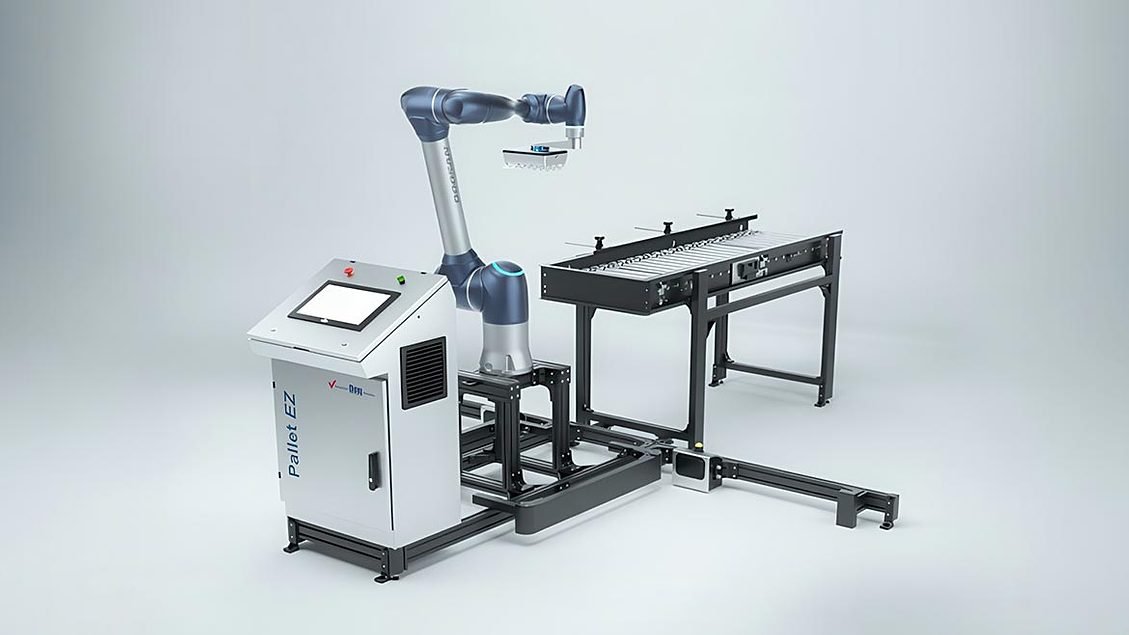
Nevertheless, the emergence of automated programming platforms like OnRobot’s D:PLOY is immediately addressing this, he says. D:PLOY allows the creation of versatile, inexpensive and easy-to-use robotics techniques particularly designed to automate high-mix duties, in response to Taylor.
“This permits producers to handle product variations and carry out changeovers in-house, making automation viable the place it wasn’t earlier than,” he provides.
Embracing robotics
The beverage {industry} has adopted robotic expertise in quite a lot of methods.
Zion’s Eubank shares that layer choosing/stacking was adopted early on as beverage producers realized that the pace and assist to the human was extremely inefficient, because of the bulkiness and heaviness of beverage SKUs.
“As producers have elevated stock, pallet shuttles, pallet and case AS/RS has turn into extra fashionable,” he says. “Conveyance stays a extremely used automation together with the robotic segments. Level-to-point AMRs have allowed for higher movement in brownfield operations with restricted availability to place in higher-end automation.”
Common Robots’ and MiR’s Heffner says that Common Robots has seen the beverage {industry} turn into one of the vital thrilling development areas for automation.
“Throughout breweries, delicate drink producers and packaging amenities, firms are underneath strain to ship greater output, preserve constant high quality and meet quickly altering shopper calls for — from smaller batch runs to sustainable packaging,” she describes. “Our cobots are being deployed on duties akin to end-of-line palletizing, case choosing and labeling.”
In contrast to conventional automation, Heffner notes that Common Robots’ cobots are light-weight, space-saving and protected to function alongside individuals, which allows customers from international beverage leaders to native craft producers to scale automation with out restructuring amenities or including advanced guarding.
“Importantly, we’re seeing adoption increase past effectivity beneficial properties,” she provides. “Beverage firms are utilizing cobots to scale back office accidents from repetitive motions like lifting heavy circumstances or loading bottling traces, whereas liberating staff to give attention to high quality management and customer-facing roles.”
The beverage market’s adoption of robotic expertise is evolving quickly, OnRobot’s Taylor states. This speedy adoption is pushed by urgent wants to handle ergonomic challenges, labor shortages and the demand for elevated effectivity, he provides.
“Traditionally, firms within the beverage sector, significantly small to medium-sized ones, have confronted hurdles in adopting robotics because of the complexity, excessive value and lack of flexibility of conventional techniques,” Taylor says. “Robotic arms alone are simply elements. Integrating them into a whole system usually concerned vital further prices, weeks or months of labor, and specialised programming experience.”
Nevertheless, he notes there’s a clear transfer towards extra accessible and “off-the-shelf” options.
“We see examples like Schrobbelèr B.V., a beverage producer, who automated their palletizing duties as a result of handbook dealing with of heavy 6-bottle bins was bodily demanding and affected productiveness,” Taylor shares. “They discovered conventional techniques daunting because of complexity and ongoing integration prices for product adjustments. The profitable implementation of an off-the-shelf palletizing resolution, powered by D:PLOY, demonstrates a rising readiness available in the market for automation that provides same-day set up, clear pricing and straightforward in-house changeovers with out programming experience.”
Furthermore, Taylor says that whereas high-volume industries have been leaders in autonomous operations because of their sources and scale, the supply of options like D:PLOY now’s making automation an accessible entry level for a broader vary of producers — together with these beforehand held again by capital challenges and experience constraints.
“This signifies a shift towards a extra widespread and profitable robotic adoption within the beverage {industry},” he provides.
Robotics can provide beverage warehouses quite a lot of advantages.
OnRobot’s Taylor lists the next benefits of robotics with superior automated programming platforms:
- Resolution to labor challenges
- Elevated throughput and effectivity
- Price-effectiveness and value transparency
- Flexibility for high-mix manufacturing
- Instant availability and same-day set up
- Low-risk funding
Common Robots’ and MiR’s Heffner echoes related sentiments, noting that cobots and autonomous cell robots (AMRs) present a complete suite of advantages for beverage warehouses.
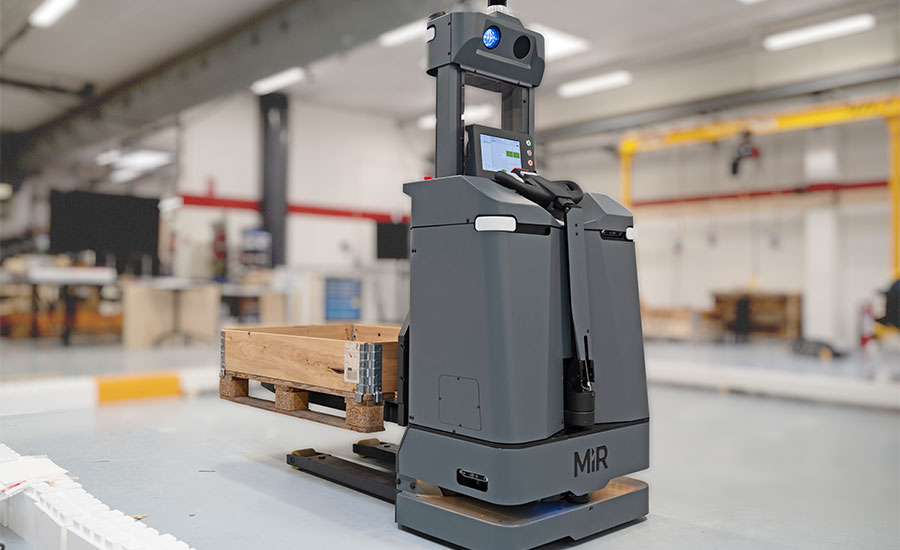
“AMRs are remodeling the way in which warehouses function by taking up the repetitive, heavy and time-sensitive duties which have historically burdened staff,” she says. “From an MiR perspective, we see two options making an instantaneous distinction in beverage logistics: our MiR Deckloads and MiR Pallet Jacks.”
The MiR AMRs are extremely adaptable transport platforms designed to maneuver circumstances, kegs or blended masses, Heffner explains, whereas the MiR Pallet Jack AMRs take automation a step additional by automating full pallet actions.
She notes advantages akin to painless palletizing and improved ergonomics, elevated productiveness and effectivity, and sooner return on funding (ROI) and decrease complete value of possession (TCO). Flexibility and flexibility, compact design and house utilization, and ease of use and programming are different benefits Heffner lists.
“Because of intuitive palletizing management software program options, cobots are simple to deploy no matter prior robotics expertise,” she states. “This considerably reduces downtime, accelerates ROI and eliminates the intimidating programming prices usually related to conventional automation. Our personal PolyScope software program, with its graphical consumer interface and software program wizards, permits new techniques to be deployed in hours and product changeovers in minutes.”
Know-how enhancements past synthetic intelligence (AI) have aided the robotics market.
“Competitors between OEMs has pushed extra strong choices from the identical organizations as they compete for market share,” Zion Options’ Eubank says. “The power to make use of software program to combine a number of robotic techniques has eased ache that was the ‘siloed’ strategy that was outstanding as latest as COVID-19.”
OnRobot’s Taylor states that a number of vital technological enhancements have vastly helped the robotics market, together with simplified software program platforms.
“Revolutionary software program like OnRobot’s D:PLOY platform is a game-changer for accessibility,” he says. “These platforms automate programming and adapt for numerous pallet patterns or product sizes with an intuitive, no-code interface, enabling simple in-house deployment and changeovers for brand new workpieces in minutes, even with out programming experience.”
Moreover, Taylor factors to enhancements like easy-to-use and versatile robotic arms, grippers and instruments, security, AMRs and improve interoperability have helped the robotics market.
“The push for industry-wide requirements for communication between units is essential and can proceed to speed up adoption by simplifying the mixing of recent applied sciences with current legacy techniques,” he provides. “OnRobot’s ‘One System, Zero Complexity’ platform considerably enhances interoperability by offering a unified expertise throughout all main robotic manufacturers. Because of this instrument adjustments can occur in seconds with out the necessity for rewiring or reprogramming, making it simpler for producers to simply join end-effectors to any robotic arm.”
Common Robots’ and MiR’s Heffner lists related developments, noting that cobots with elevated payload capacities and better attain are appropriate for a wider vary of functions and heavier merchandise.
As for what’s subsequent for robotic techniques, Zion Options’ Eubank says continued development of software program pushed selections will assist make the bodily operation extra strong and create higher movement.
“Having the ability to pre-build trailer masses previous to waving, serving to with each operational labor prices and extra dense and correct transportation modes will proceed to be an attractor — these firms which make the most of these capabilities together with their bodily system will rise to the entrance of conversations even when prices are barely greater,” he states.
In the meantime, Common Robots’ and MiR’s Heffner anticipates a number of key developments, from superior AI decision-making to next-generation sensors. She additionally expects to see energy-efficient robotics and digital twins and simulation.
“The widespread use of real-time digital fashions of manufacturing environments (digital twins) will allow the optimization of autonomous techniques even earlier than bodily deployment, thereby decreasing dangers and prices related to implementation,” Heffner states.
On the horizon, OnRobot’s Taylor suspects a brand new technology of “off-the-shelf” automation that guarantees to essentially change market expectations.
“This entails a shift towards universally accessible, full, pre-built and pre-configured robotic techniques with speedy availability and clear pricing, shifting considerably past the restrictions of conventional ‘turnkey’ options that also require intensive customization,” he concludes. “This may empower producers and integrators with highly effective new choices, driving particular person success and total {industry} development.”
Synthetic intelligence affecting robotics market
Apart from SKU proliferation and different beverage traits, the development of synthetic intelligence (AI) capabilities has affected the robotics market inside the beverage {industry}, consultants notice.
Drew Eubank, government vice chairman at Zion Options Group, Covington, Ky., expresses his ideas on the subject.
“AI has allowed for higher slotting and machine studying, which permits for higher pallet builds on blended case-loads, which ends up in higher utilization and cheaper transportation prices,” he says. “Developments in AI pushed wave logic has created higher batch capabilities resulting in much less errors. The power for point-to-point AMRs to study ‘new paths’ results in decreased journey and extra environment friendly paths.”
The arrival of the digital working twin has allowed for operations to seek out “tweaks” in course of that drive actual unit stage financial savings and elevated service ranges, Eubank notes.
James Taylor, chief business officer at OnRobot, Novi, Mich., says that, whereas there may be numerous buzz surrounding AI, he suspects the worth it might create is one thing the {industry} nonetheless is attempting to determine.
“There are some apparent makes use of, particularly round coding and programming, the place AI as a instrument can assist engineers be extra environment friendly and productive in product growth, however on the subject of enchancment in how functions carry out, the image is perhaps a bit extra aspirational than actuality but,” Taylor shares. “The dialog turns into much more clear when you think about that AI can also be a really extensively used, however poorly outlined time period. What’s the ‘I,’ actually? Proper now, it appears to be largely advanced algorithms and complicated machine studying, which has been evolving, however not likely new.”
Though AI has the potential to allow extra refined automation, Taylor believes that its full potential in making robotic techniques really autonomous and adaptable throughout all manufacturing contexts is “nonetheless a manner out on the horizon.”
“There’s a lot alternative to enhance operational effectivity with expertise already accessible at this time with out ready for the long run,” he says.
Jane Heffner, vice chairman of gross sales for Common Robots and Cellular Industrial Robots (MiR), feels as if AI development has “essentially reworked” the robotics market, having created unprecedented alternatives for beverage producers to automate smarter, sooner and extra flexibly.
As synthetic intelligence and machine studying turn into embedded in collaborative robots, Heffner says Common Robots and MiR see beverage {industry} prospects leveraging these applied sciences to deal with challenges as soon as thought out of attain, with quite a lot of options.
“The MiR PalletJack AMR stands out on this AI-driven period by leveraging superior visible sensors and machine studying algorithms to rework pallet dealing with,” she states. “Its AI-based pallet detection system acknowledges pallets even when they’re broken, mislabeled or wrapped in stretch movie, one thing conventional automated options can’t do reliably.”
Heffner additionally notes distinctive duties enabled by AI robotics, together with versatile pallet identification, automated, constant motion and steady studying and adaptation. As for collaborative robots, she says AI delivers advantages akin to smarter, adaptive automation and enhanced high quality management and effectivity.
“AI-driven robotics allow real-time decision-making, better accuracy and flexibility in beverage warehouses and manufacturing environments,” Heffner describes. “Methods powered by machine studying can mechanically alter to altering SKUs, recuperate from technical hiccups and optimize choosing, palletizing or sorting processes — at the same time as product configurations and orders change dynamically.”
This implies beverage amenities now can automate advanced duties with out fixed reprogramming, supporting frequent new launches and seasonal spikes, she provides.
